Intestinal wellness: much more than just a matter of digestion
Digestion, microbiota, and intestinal barrier: discover how they work together and why understanding them is the first step to taking care of your gut.
Have you ever felt bloated after lunch, even without having eaten particularly much?
Perhaps you thought it was due to a specific food, a heavy meal, or the rush with which you ate. Sometimes it can be like that, but the reasons can be different.
In fact, our gut performs many more functions than we imagine.
Every day it transforms food, absorbs nutrients, hosts billions of microorganisms, and helps protect us through a complex system of natural barriers.
All these activities are interconnected. And it is precisely this relationship that makes the gut such an interesting ecosystem.
To better understand intestinal well-being, we must start from three fundamental elements: digestion, microbiota, and intestinal barrier.
Digestion: What Really Happens After a Meal?
When we eat, our body initiates a series of processes to transform food into simpler substances that can be absorbed and utilized.
A significant part of this work is carried out by digestive enzymes, substances that help break down carbohydrates, proteins, and fats.
However, not everything we eat is digested in the same way.
A portion of the fibers found in plant foods, for example, reaches the colon, where it can be utilized by certain intestinal microorganisms.
During this process, known as fermentation, various substances, including gas, are produced.
Gas production is a natural phenomenon. However, when we experience bloating or abdominal tension, the causes can be multiple.
They do not necessarily stem from poor digestion: intestinal motility, individual sensitivity, and the characteristics of the foods consumed can also play a role.
This is why not all intestinal disorders have the same origin.
The Intestinal Microbiota: A Community That Works With Us
Have you ever heard of intestinal flora?
Today, science primarily uses the term intestinal microbiota to refer to the collection of microorganisms that live in our gut.
We can imagine it as a densely populated community, where each inhabitant performs different activities.
Some microorganisms participate in the transformation of dietary fibers, while others produce substances that interact with intestinal cells and our body.
Among these are short-chain fatty acids, produced from the fermentation of certain fibers and involved in various physiological processes.
But there is an interesting detail: the microbiota is not identical in all people.
Its composition can vary depending on diet, age, medications, and numerous other factors.
This is why it is reductive to think that the well-being of the microbiota simply depends on increasing so-called good bacteria.
Does the Microbiota Always Need New Bacteria?
Not necessarily.
When talking about intestinal flora, probiotics often come to mind. However, scientific research also studies the role of diet and plant substances in influencing the environment in which microorganisms live.
Among the compounds of particular interest are polyphenols, natural substances found in numerous plant-based foods, such as fruits, vegetables, tea, and cocoa.
Some polyphenols can interact with the microbiota and be transformed by intestinal microorganisms.
An example is castalagin, a compound belonging to the family of ellagitannins, also identified in Camu Camu (Myrciaria dubia), a small fruit native to the Amazon.
Castalagin has been studied for its interactions with specific intestinal bacteria, especially in the context of preclinical research. These results contribute to the understanding of the relationships between plant compounds and the microbiota, but do not alone demonstrate clinical benefits in humans.
What we know is that the microbiota does not live in isolation: it is part of a complex environment, continuously interacting with diet and our body.
The Intestinal Barrier: A Protection That Works Every Day
So far, we have talked about digestion and microorganisms. But there is a third function, equally important, that we often know less about.
The gut must absorb the nutrients necessary for our body while also helping to limit the passage of unwanted substances and microorganisms.
How does it manage to perform both tasks?
Thanks to the intestinal barrier, a system made up of cells, mucus, and other elements that participate in protecting the intestinal surface.
We can imagine it as a control system: it allows the passage of what needs to be absorbed and helps keep the contents of the intestine separate from the underlying tissues.
The microbiota also continuously interacts with this barrier, contributing to the balance of the intestinal environment.
What is the Intestinal Glycocalyx?
On the surface of the intestinal cells, there is a very thin coating called glycocalyx.
It is a microscopic structure that participates in the interactions between intestinal cells and the surrounding environment and contributes to the protection of the cell surface.
The glycocalyx is different from the mucus layer, but both are part of the complex system that characterizes the intestinal mucosa.
Scientific research continues to study these structures to better understand their role in intestinal physiology.
Digestion, Microbiota, and Barrier: Three Functions, One Unique Ecosystem
Now we can look at the gut from a different perspective.
The digestion allows for the transformation of food and the availability of nutrients.
The microbiota participates in numerous metabolic activities and interacts with the intestinal environment.
The intestinal barrier helps regulate exchanges between the contents of the intestine and our body.
These are three different functions, but they are closely interconnected.
This does not mean that every episode of bloating is due to an alteration of the microbiota, nor that a digestive difficulty necessarily indicates a problem with the intestinal barrier.
Instead, it means that intestinal well-being should be considered as a whole.
Understanding these differences helps us better comprehend our body, without seeking a single explanation for every disorder.
How Can We Take Care of Our Gut Every Day?
Scientific knowledge becomes truly useful when it helps us make more conscious daily choices.
Radical changes are not necessarily required. Often, the starting point is to pay more attention to our habits.
A varied diet. Fruits, vegetables, legumes, and whole grains provide fibers and numerous plant substances. Varying foods helps supply the body with different nutrients.
Gradual fiber intake. Some fibers are utilized by intestinal microorganisms, while others primarily contribute to regularity. The European Food Safety Authority (EFSA) considers an intake of about 25 grams of fiber per day adequate for normal intestinal function in adults. However, it is important to gradually increase fiber consumption, especially when prone to bloating.
Attention to daily rhythms. Eating slowly, maintaining good hydration, and regularly engaging in physical activity are habits that can promote digestive well-being.
Listening to your body's signals. If bloating, pain, or intestinal changes become frequent or persistent, it is important to discuss them with a healthcare professional to understand the possible causes.
Taking care of the gut does not mean seeking an immediate solution to every sensation, but learning to recognize one's needs.
The PhytoItalia Approach: Three Perspectives on Intestinal Well-Being
The complexity of the gut also represents an important starting point for nutraceutical research.
At PhytoItalia, the study of formulations considers different aspects of gastrointestinal physiology: digestion and mucosal surface, microbiota, and intestinal barrier.
Three connected but different perspectives, which help to understand why not all formulations dedicated to the gut are the same.
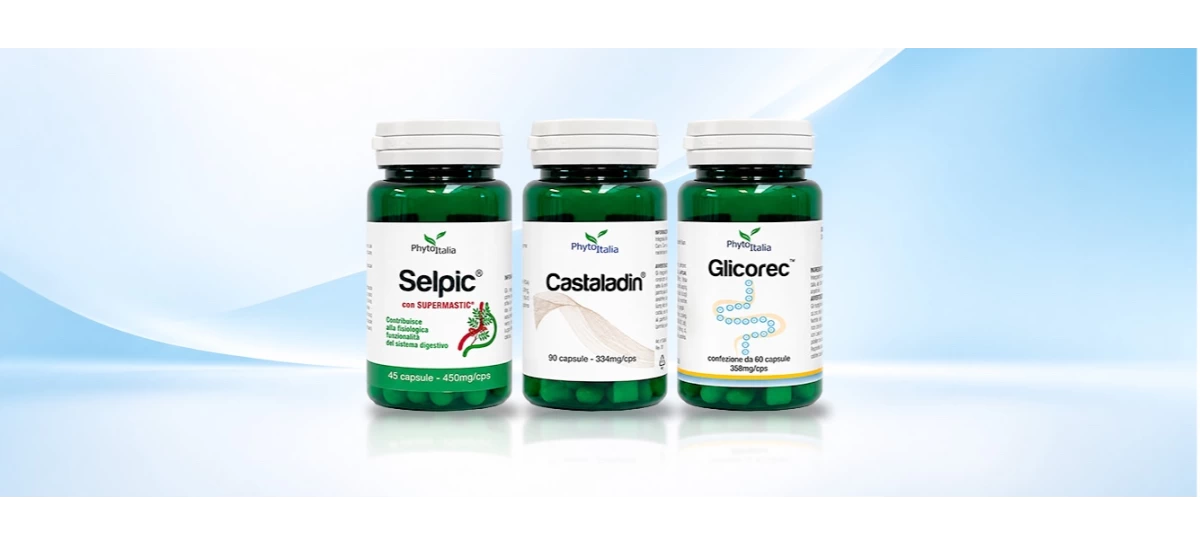
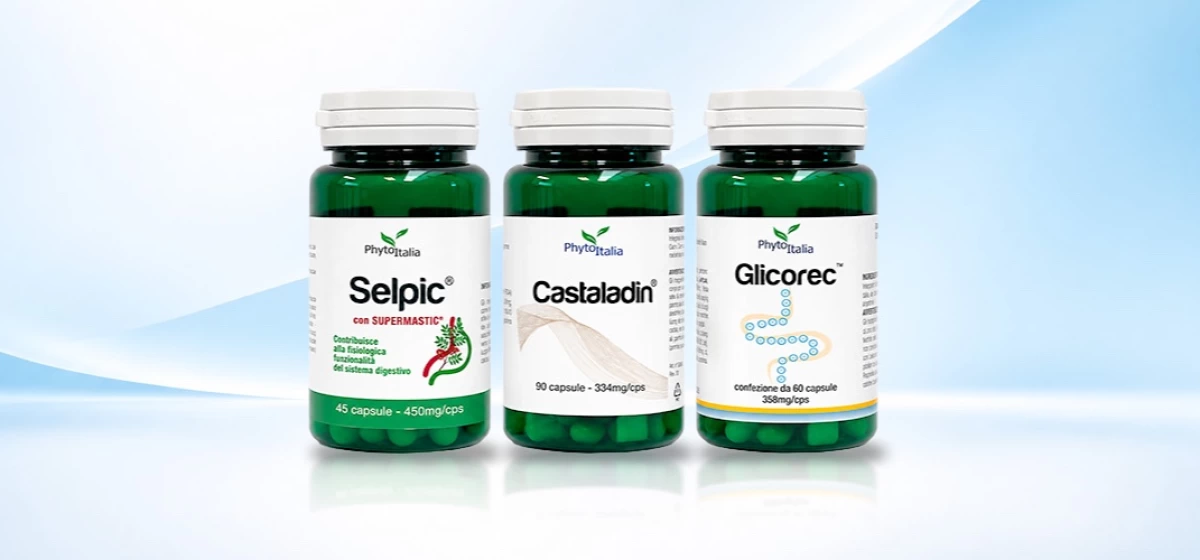
GLICOREC | Digestion and Glycocalyx
GLICOREC is a dietary supplement that combines mastic from Chios, a mix of digestive enzymes, chondroitin sulfate, sodium hyaluronate, and organic silicon, along with other components of the formulation.
Its composition brings together selected ingredients based on a rationale that considers both digestive function and the characteristics of the gastrointestinal surface.
The glycocalyx represents one of the elements of interest in this scientific exploration.
Discover GLICOREC and its formulation
CASTALADIN | Microbiota and Plant Compounds
CASTALADIN contains Camu Camu (Myrciaria dubia), used in the form of dry extract and fruit powder.
Camu Camu is a plant-based source of scientifically interesting compounds, including castalagin, a polyphenol also studied for its interactions with the microbiota.
Unlike probiotic formulations, CASTALADIN does not contain added bacterial strains.
Its composition represents a different formulation approach, linked to scientific interest in plant compounds and the intestinal ecosystem.
Discover CASTALADIN and its ingredients
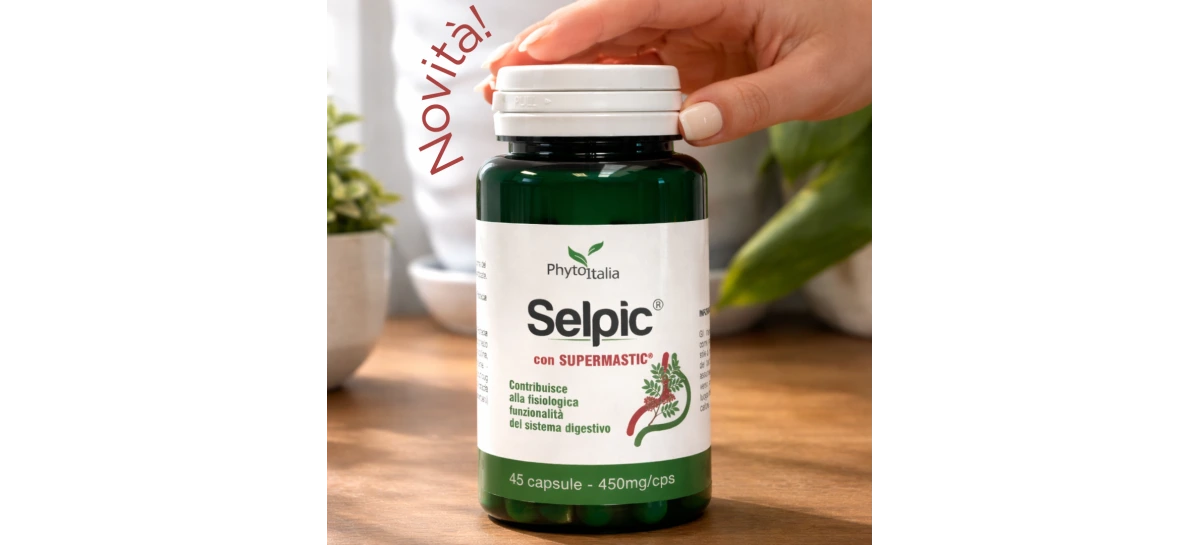
SELPIC | Mastic from Chios and Intestinal Mucosa
SELPIC contains mastic from Chios, a natural resin obtained from Pistacia lentiscus, combined with Supermastic®, an extract of the same resin characterized by its triterpene content, and Lithothamnion calcareum.
Mastic from Chios is the subject of scientific studies in the field of gastrointestinal physiology.
SELPIC represents the third perspective of PhytoItalia's exploration, linked to interest in the intestinal environment and the characteristics of the mucosa.
Discover SELPIC and its formulation
Intestinal Well-Being Begins with Knowledge
Our gut works every day through processes that we often do not perceive.
It digests food, hosts a community of microorganisms, and maintains a surface capable of absorbing and protecting.
Digestion, microbiota, and intestinal barrier are not three steps to be followed necessarily, but three aspects of a unique ecosystem.
Understanding them means moving beyond the idea that there is a single explanation for all intestinal disorders or an identical solution for every person.
Because taking care of your gut starts with a simple yet fundamental gesture: learning to know it.
You might also be interested in